Nigeria Converts Abandoned Petrol Station to CNG Refueling Facility
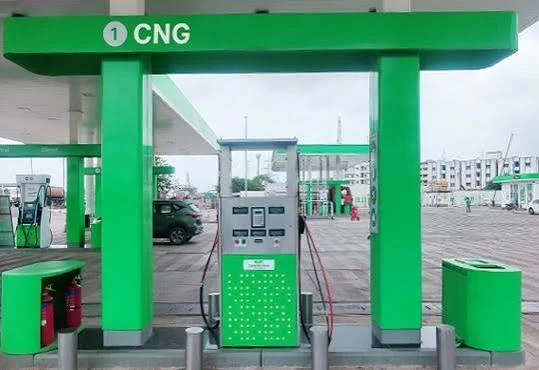
The Federal Government has repurposed an abandoned petrol filling station at the State House in Abuja into a Compressed Natural Gas (CNG) refueling facility. This change aims to reduce Nigeria’s reliance on petrol and diesel, especially after the removal of fuel subsidies earlier this year.
Temitope Fashedemi, the Permanent Secretary of the State House, opened the new facility. He explained that the project was completed at no cost to the State House, thanks to a partnership with the Presidential Initiative on Compressed Natural Gas and Electric Vehicles and a private company, Rollin Energy Limited. Fashedemi emphasized that this initiative is meant to show private investors the potential in the CNG sector.
Fashedemi noted that the State House has already started using CNG technology in its vehicle fleet, which includes about ten new hybrid JAC vehicles. In the coming weeks, State House staff will have the chance to convert their personal vehicles to CNG-hybrid systems, provided they meet certain technical requirements.
Mubarak Danbatta, the CEO of Rollin Energy, mentioned that the facility in Karu, Abuja, can serve around 150 vehicles daily, including motorcycles. It features double-nozzle dispensers for efficient refueling. This project is the second collaboration between Rollin Energy and the Presidential Initiative, following an earlier project launched in May.
Rollin Energy has plans to expand, with two new CNG stations expected to open in Kano soon and additional stations planned for Kaduna. The company aims to have nearly 15 CNG facilities operating across Nigeria by the end of 2026.
Ismael Ahmed, the Chairman of the Presidential Initiative, stated that Nigeria currently has 106 operational CNG stations, with plans for 2,000 more by 2027. He highlighted that CNG buses have significantly lowered transport costs, with some routes seeing fare reductions of up to 40%.
Toyin Subair, the Senior Special Assistant to the President, added that both the Federal and state governments are increasing investments in CNG-powered vehicles to help lower transportation costs for citizens. He also mentioned that over 30,000 vehicle conversion kits will soon be available in Nigeria to support this transition.
[logo-slider]