Deaf Nigerians Celebrate and Preserve Indigenous Sign Languages
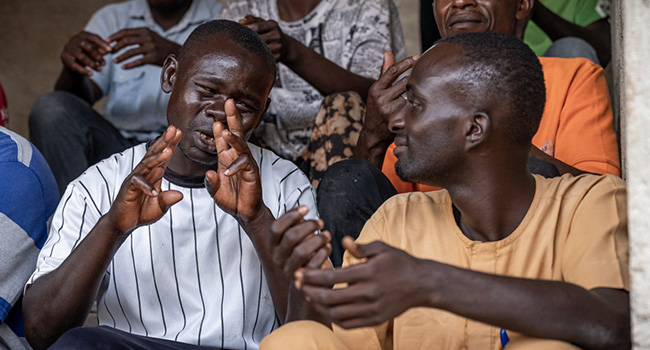
Umaru Zayyanu, a 37-year-old from Nigeria, uses Hausa sign language to express his identity, saying, “I am a Nigerian.” This form of communication is part of a rich tradition of indigenous sign languages that existed long before formal sign language education began in the country in 1960.
In Nigeria, many deaf children struggle to find dedicated schools due to limited educational resources. This has led to a lack of attention on local sign languages, which are vital to the country’s cultural diversity. Festus Zenda, who works with local deaf communities, emphasizes the need to document and preserve these languages before they fade away due to changes in education and technology.
In Zuba, a suburb of Abuja, deaf residents communicate using Hausa sign language, which serves as a common language among deaf people in northern Nigeria. Sanni Lawal, a local business owner, expressed pride in his culture and hopes for the wider use of indigenous sign languages.
Nigeria’s official sign language was introduced by Andrew Foster, an American who helped establish deaf education in various African nations. However, some experts believe that indigenous sign languages have declined as governments focus on formal languages.
Despite this, local sign languages remain a crucial part of community life. Joshua Gyang, a researcher, warns that without efforts to preserve these languages, they risk disappearing. Politicians in Nigeria have also recognized the importance of local sign languages, often employing Hausa signers to engage deaf voters during campaigns.
Although a USAID program aimed at training deaf educators in Nigeria was recently cut, researchers and activists continue to work on documenting indigenous sign languages. Zayyanu noted that these languages are integral to their cultural identity, stating, “Even before we go to school, we have our own language. Instead of burying that one, why not develop it?”
[logo-slider]